The ONET OnLine and ONET Content Model
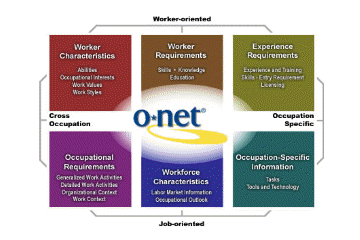
Use ONET Model with any online career tests.
The ONET OnLine and Content Model had six descriptors or domains –
- Worker Characteristics
- Worker Requirements
- Experience Requirements
- Occupation Requirements
- Occupation Specific
- Occupation Characteristics
Worker Characteristics are the acquired knowledge, skills, effective work performance.
- Abilities — Qualities that influence performance
- Occupational Interests — Preferences for work environments
- Work Values —Specific needs that are important to a person's satisfaction
- Work Styles — Personal characteristics that can affect how well someone performs a job.
Worker Requirements are characteristics descriptors relating to work-related qualities that are acquired and/or developed through experience and education.
- Basic Skills — Developed abilities that facilitate learning or the gaining of knowledge
- Cross-Functional Skills — Developed skills that increase performance of activities that occur across jobs
- Knowledge — System of principles and facts
- Education — Prior educational experience required to perform in a job
Experience Requirements — requirements that are required to perform to work activities and explicitly linked to certain types of work activities. Experience and Training — When someone is hired to perform a job, there are the following requirements –
- Basic Skills - Entry Requirement — Entry requirement for skills that are need to increase learning or the gaining of knowledge
- Cross-Functional Skills - Entry Requirement — Entry requirement for developed abilities and skills that impove performance of activities that occur across jobs
- Licensing — Licenses, certificates, or registrations that are awarded to show that a job holder has gained certain skills.
Occupation-Specific Information
- Tasks — Occupation-Specific Tasks
- Tools and Technology — Machines, equipment, tools, software, and information technology workers used to perform work tasks.
Workforce Characteristics
- Labor Market Information — Current labor force characteristics of occupations
- Occupational Outlook — Future labor force characteristics of occupations
Occupational Requirements are factors that describe what various occupations require.
- Generalized Work Activities — General types of job behaviors
- Detailed Work Activities — Detailed types of job behaviors
- Organizational Context — Characteristics of the organization that influence how people do their work
- Work Context — Physical and social factors that influence the nature of work
Source: ONET OnLine Career Exploration Tools
DOL/ETA (U.S. Department of Labor, Employment and Training Administration) is the exclusive owner of all rights under U.S. copyright laws and international treaty provisions in the O*NET ™ Career Exploration Tools. Any other copyright notices refer only to Holland Codes Resource Center's original work in the product.
O*NET and O*NET IN IT and logos are trademarks of the DOL/ETA (U.S. Department of Labor, Employment and Training Administration).